Thursday, March 22, 2018

week 9


USING MOBILE PHONES IN THE LANGUAGE CLASSROOM.

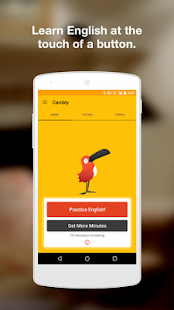
Nowadays technology plays an important role in teaching, so as teachers we have to take advantage of all the tools that we have on hand. The mobile phone is not used just for communication we can take this as a tool in the teaching process. First, we have to take in account that students have a cellphone and if they are young ask for permissions to their parents. Then, teachers have to create plans or objectives to achieve the language learning. Here I will mention some activities using mobile phone device.

1.       Use the Voice Memo Recorder feature to record conversations outside the classroom: students can record interview or conversations they engage in outside the classroom and make discussion in class.

2.       Use the Text Messaging feature for circular writing: students can create a story together by contributing one text message at a time. Each student writes a sentence or two and then sends this on to the next student, who adds another message, and so on until the story is complete.

3.       Use the mobile phone for social networking: Like Twitter, Facebook and Myspace where students can post pictures and comment about it using the target language.

4.       Use the mobile phone to play games: such as Scrabble and crossword puzzles and so on. You have to select the appropriate games for encourage them to learn the new language and aid them to search more games that help them in this process.

5.       Use the mobile phone to check student comprehension and get feedback: One way is to add an element of interactivity to your classes through audience participation. Polleverywhere (www.polleverywhere.com) is a free program that allows the teacher to pose survey questions to students. Students respond by texting their responses.

To conclude, all these ideas allow to students to increase their opportunities in the learning process by taking advantage of mobile phone device. However, there are some challenge in the used of cellphones in class or outside, students can be distracted quickly but it to be a worthwhile investment of their time and a welcome addition to their language teaching methods.


Resultado de imagen para mobile phone i n teaching english


I will give to this article 5 stars
Wednesday, March 14, 2018

week 8


AUTHENTIC MATERIAL FOR TEACH ENGLISH

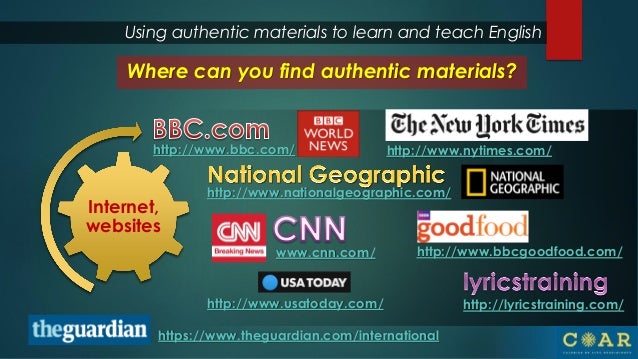
Is time to create, time to involve our students in the real life. Students going to learn a lot with this way. But, what authentic materials mean. This means that teachers have to create and search for real, current and interesting or relevant materials, so teachers have to recognize what students are interested in knowing that can serve them outside the classroom, as well if the material is length appropriate or it is for their level. In fact, the internet plays an important role because is an easy way to find information, websites, apps and podcast; that teachers can use in the classroom. In the other hand, there are 3 creative ways to use authentic materials. For instance, Weather Report: There Is a Blizzard on the Way! (www.weather.com) For familiarize your students with the U.S. climate by exposing them to weather reports, with this student can learn how to make a weather report, learn vocabulary about the weather and give tips to be prepared for any catastrophe. Second, menus: Order Your Favorite Dish. Teacher can give students a worksheet where they can write down what they order at each station. Include a section for price, divide students into teams so they will need to move together from one station to another. Also, at each station, a team member should be the waiter/waitress and use the back of his/her worksheet to take orders. Finally, Job Opening: 1-2-3 I Need a Job! (indeed.com) Students can make work applications and be preparing for a job interview. To conclude, Authentic materials bridge the gap between classroom language use and real life language use by bringing familiar linguistic situations and materials right into the classroom.


Resultado de imagen para authentic material on the internet

I will give to this article 4 stars

Thursday, March 8, 2018

week 7


THE INTEGRATION OF THE INTERNET IN TO ELT


In the following years the internet become an important tool for teachers and students. There are many applications that we can find on the internet and are very useful. Like, pinterest, prezzi, facebook, youtube so on. Moreover, the internet could be use in three ways. Firstly, could be used as an informative; because students utilized web resources to help develop and inform speeches. Second, as a Communicative tool offering techniques for using text-based chat to develop oral communication skills. Finally, The Internet as a Social and Mobile Technology to offer ways to integrate mobile web and other features of mobile phones into ELT. In fact, is well-Known that the internet aid students to increase learner motivation and reduce learner anxiety, promote learner autonomy, aid in retention such as when imagery is perceived as strange, funny, or interesting; through these ways to use the internet. So that, teachers have to select appropriates internets tool for they students, according to the context, type of students, level and the access of students to the internet or a computer. Teacher can download apps that does not need an internet connection; if the classroom is not equipped with technology it does not mean that we cannot bring materials from the internet. It is one of the advantage of the internet that you can consider. To conclude, the internet is a good tool that surround our word through computers, cell-phones and others technological devices. Also, teachers or students can download apps that allow them to interact however they can use apps without internet.


Resultado de imagen para apps for tEACH ENGLISH
I will give to this article 5 stars.

Thursday, March 1, 2018

week 6

How vocabulary and reading comprehension are related and how technology aid them.

Reading is an active activity that involves the reader with the text. How students L2 acquire the reading skill is very important, because through readings learners make use of variety of skills and strategies, combined with background knowledge. In fact, vocabulary plays an important role in the reading comprehension process. For instance, a fluent L2/FL reader need to know about 2,000 to 7,000 words and sometimes even more if they want to reach native-like fluency. And for understanding of academic text is required to know at least of 7,000 words. So that, a reader has to recognize 95% of word in whatever text to comprehend it, and he or she has to know the different meanings and the grammatical properties of word according to the context. This means that vocabulary and reading are inter-related because a good reader has a rich vocabulary, and vocabulary is the key that ensure reading proficiency.
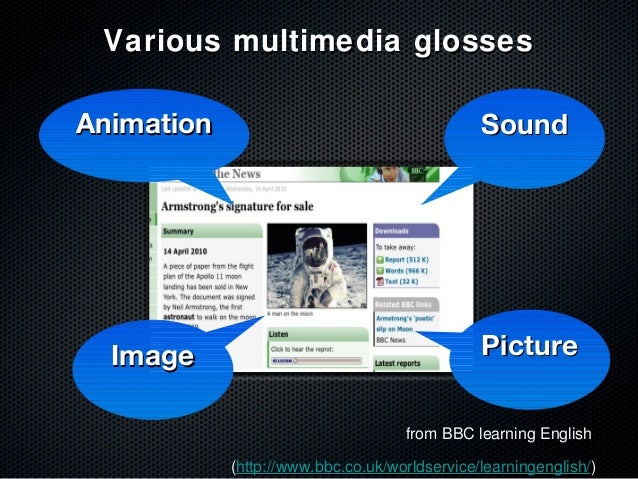
Furthermore, teachers are aid though with some technological resources. For instance, or vocabulary acquisition, instructors could make great use of technology by using multimedia glossed texts, electronic dictionaries, corpora and concordance software, as well as various vocabulary-­building software. Moreover, full glossing seems to be the best facilitator of vocabulary acquisition and reading comprehension, as opposed to little or non-­glossed texts. In addition, best results in retention are provoke by picture + text annotations, whereas pronunciation, video, and audio glosses seem to correlate negatively with reading comprehension. However, not all of them are significant for classroom instructions. There are some materials are focus on a specific skill, while other on a wide range of skill and strategies. This means that teachers have to select materials that motivate students and materials appropriate for their level.
To sum up, the vocabulary must be taught first in order to improve the reading comprehension in the learns. Teachers are aid through technology. Like, multimedia glosses for vocabulary and reading development, multimedia-­enhanced electronic dictionaries designed specifically for English language learners, and which have several built ­in aids that their book counterparts cannot provide and other multimedia task that  contain various types of content, such as text, audio, video, graphics, animation, and interactivity.
Imagen relacionada


I will give to this article 5 stars